23 August 2026
What changes when students encounter a place live?
Earlier this month, Tegan and Aleksandra — History teachers at Casey Grammar — shared their experience of our Gallipoli learning journey at the History Teachers’ Association of Victoria Annual Conference. Their presentation included a live connection with Hasan, our guide on the Gallipoli Peninsula. It brought an important question into focus: what changes when students can explore a significant place live?
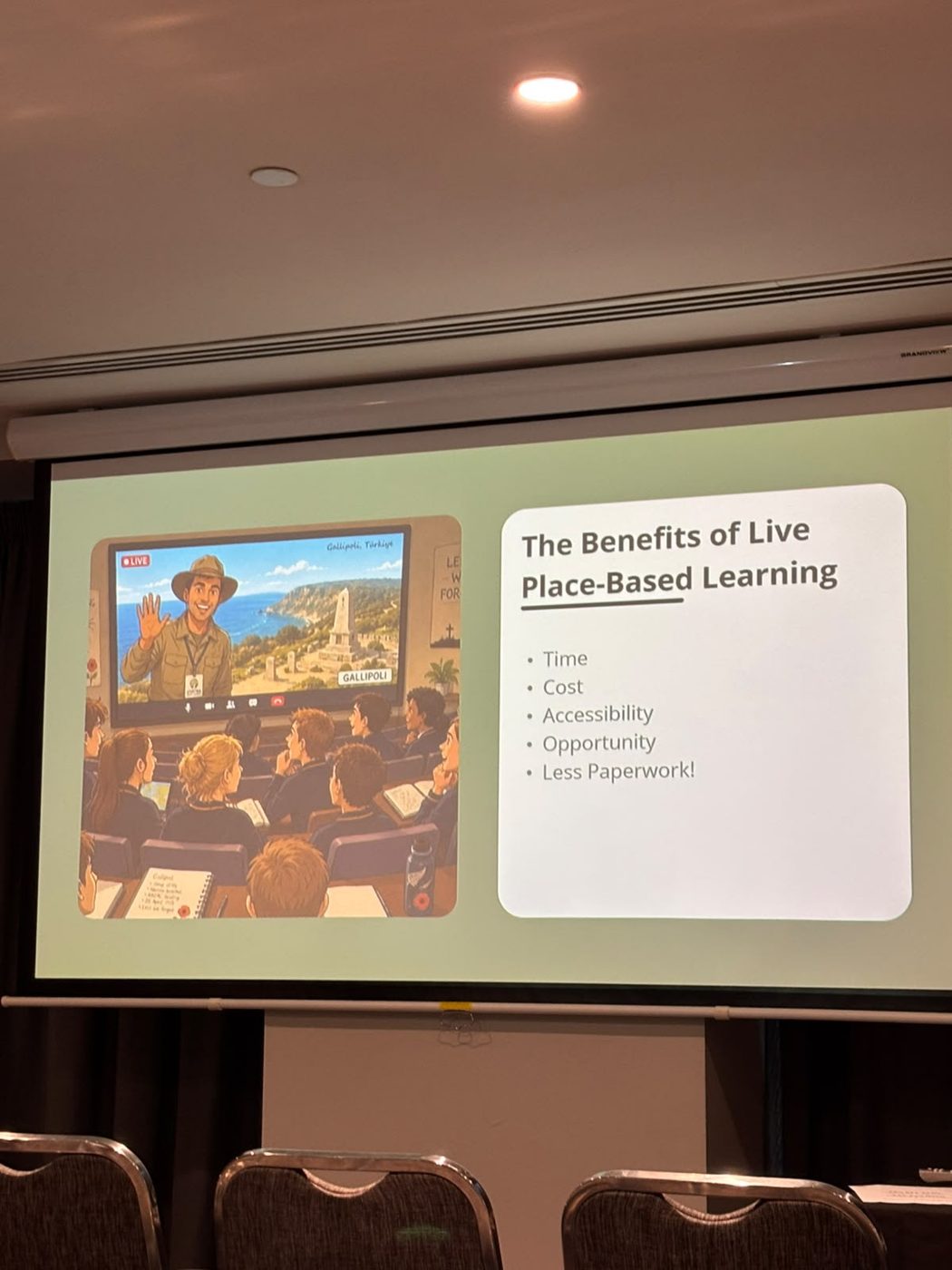
Students often encounter Gallipoli through photographs, maps and written sources. These remain essential, but a live connection allows them to investigate differently. They can ask for a closer view, test an idea, seek clarification and allow one answer to generate another question. Instead of simply watching content, they participate in an inquiry.
That distinction — between seeing a place and investigating it — has been a recurring theme for us this month.
Looking more closely at Uluru
I recently visited Uluru and met Rachel, our local guide, in person after working together across many online sessions.
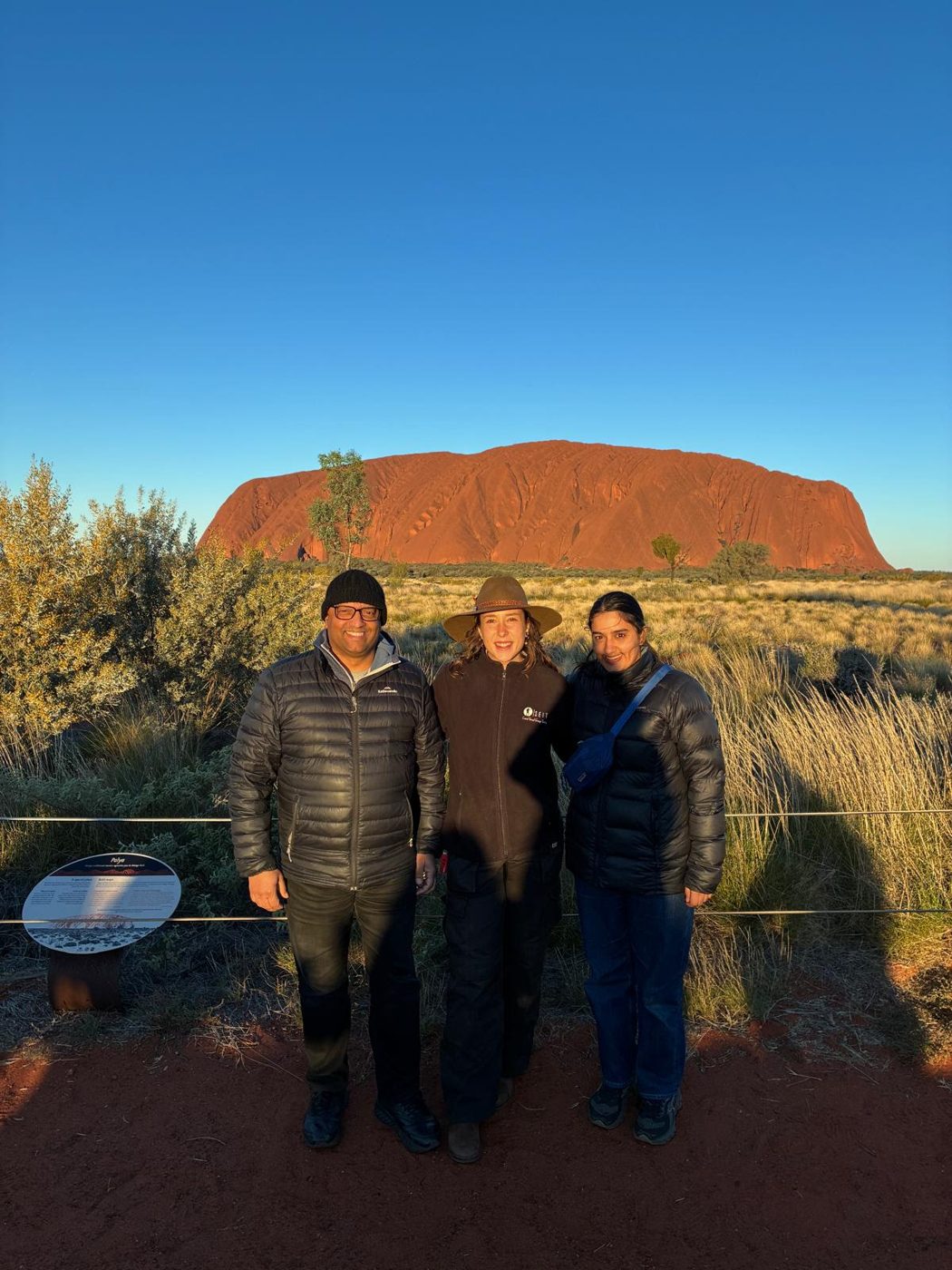
Walking around the base revealed details that the familiar distant image cannot: folds, fissures, caves, variations in colour and evidence of weathering. These observations have prompted us to include more close-up observation in our Geography: Landscapes & Landforms livestreams from Uluru. For students studying landscapes and landforms, this should open richer lines of inquiry:
- What can the rock’s surface tell us about the processes acting upon it?
- How does viewing a landform at different scales change what we notice?
- How might geological and cultural understandings of a landscape sit alongside one another?
Encountering the Bark Petitions through place and people
From Uluru, I travelled to Yirrkala in East Arnhem Land, where I met Tiani and Rachael, who present our History: Rights & Freedoms — The Bark Petitions sessions.
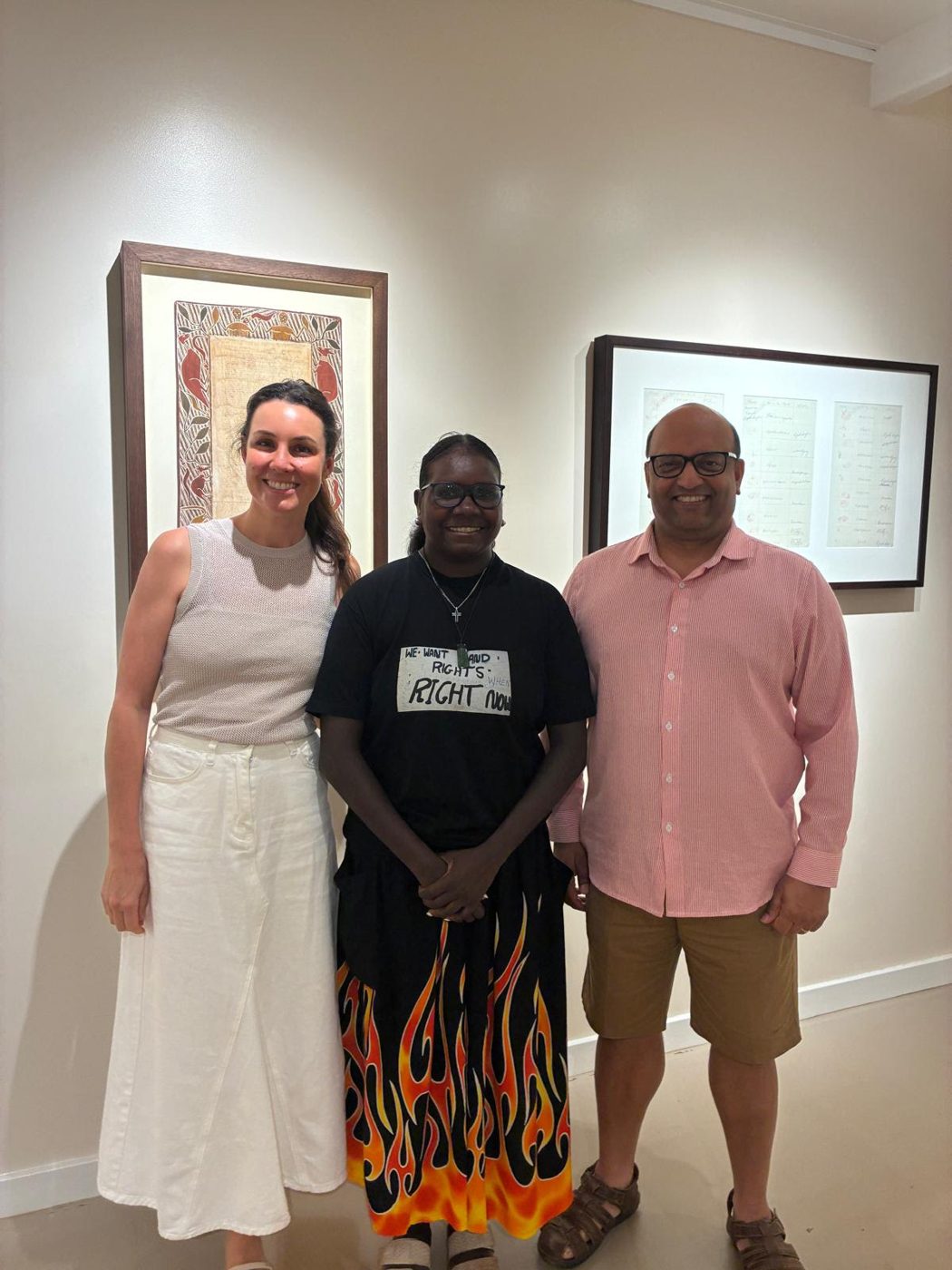
Again, whilst students can examine a reproduction or transcription of the Bark Petitions in class, the live connection with Tiani — a Yolŋu woman of the Gumatj clan whose grandfather Roy Marika was one of the key people behind the petitions — brings home how history is always a continuing story.
As with Uluru, we were able to work out how to bring other relevant artefacts into the livestream at the Buku-Larrnggay gallery, where one of the Bark Petitions is on display (behind us in the photo), and to find a new location that showcases the stunning coastal landscape.
From interest to access
One message has emerged consistently from our conversations with teachers, including those at the recent HTAV and GTAV annual conferences: live, place-based learning offers something genuinely valuable, but the challenge is finding room for it within limited school budgets.
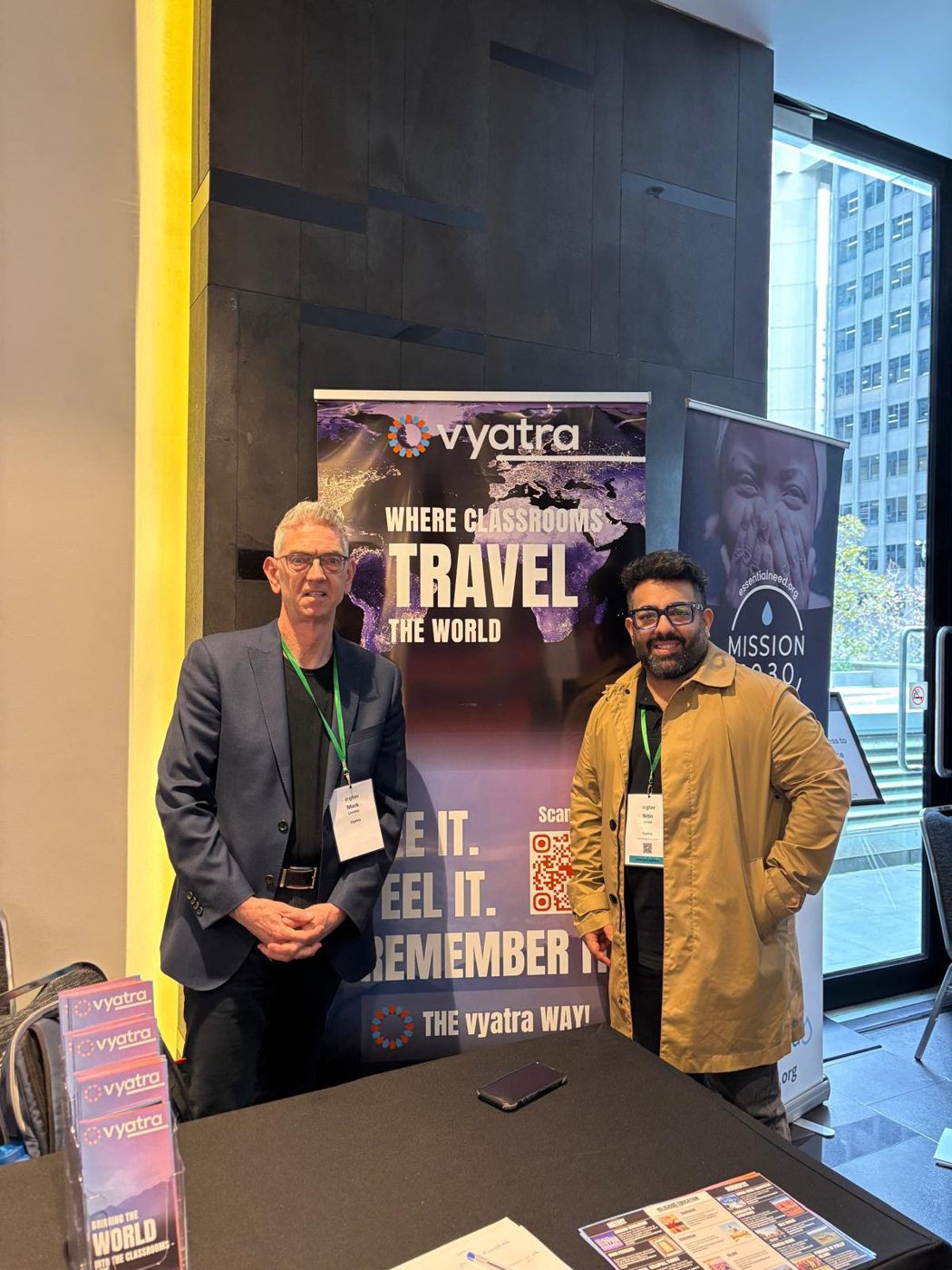
We are approaching that challenge in two ways.
First, schools can now book a Vyatra journey as a faculty professional learning session. This allows teachers, curriculum leaders and other decision makers at the school to experience the format firsthand. We have regularly seen with our offering that the proof of the pudding does seem to be in the eating! Once educators participate in a live journey themselves, its value becomes much easier to understand, and to weigh against competing budget priorities.
We are currently running multiple sessions for schools across History: Gallipoli, History: Shogunate Japan, Geography: Environmental Change & Management in Southern Africa, and RE: Hinduism. Any of these sessions can also be incorporated into a faculty meeting, planning day or whole-school professional learning program.
Our new website makes it easy to explore the journeys and arrange a session for your team.
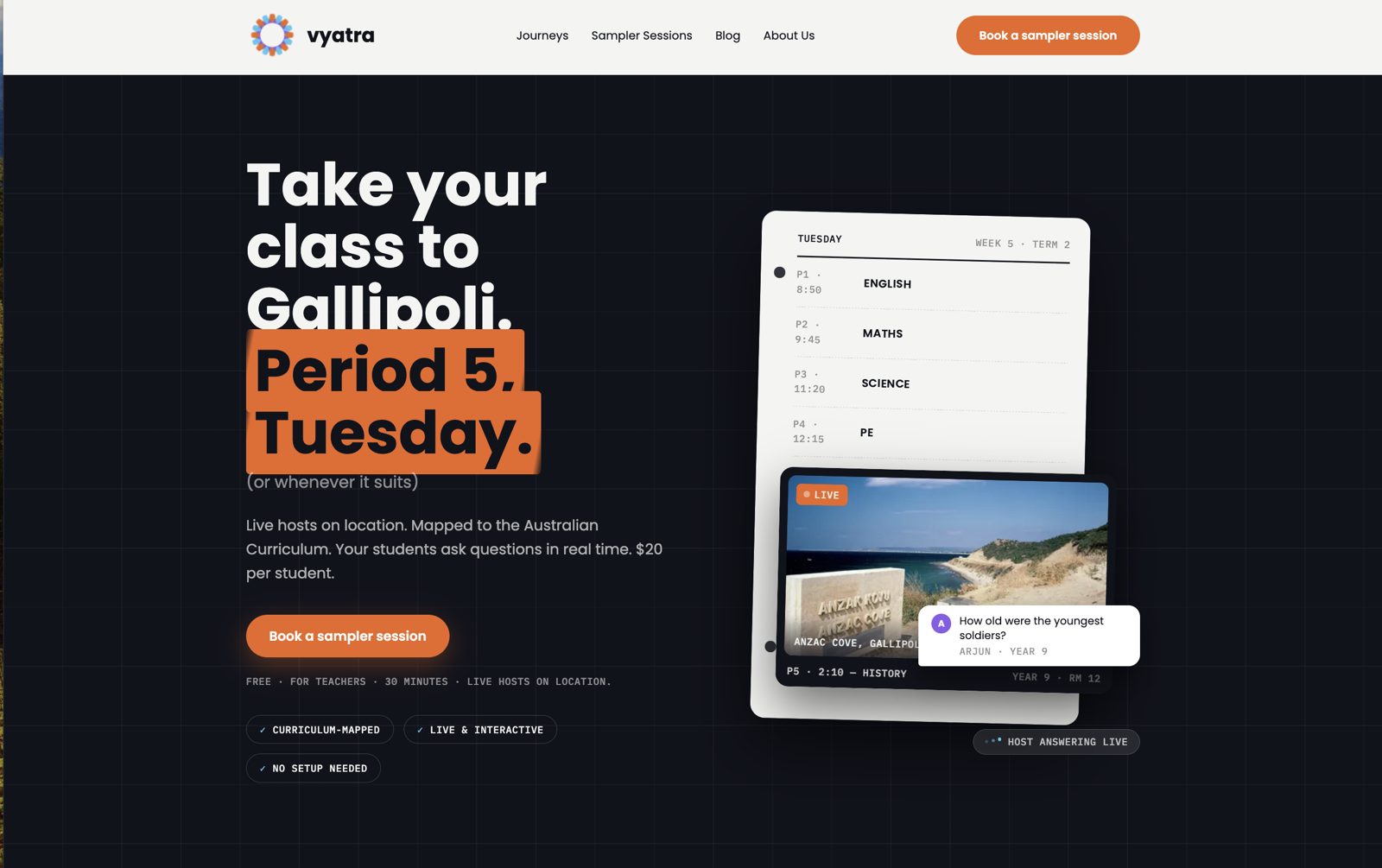
Second, we are exploring corporate sponsorships and grant opportunities that could help cover schools’ participation costs, particularly for communities with fewer resources. I am pleased to report that there is interest, and look forward to sharing more as these options develop.
It has been a full and rewarding month — from meeting our guides on Country, to exchanging ideas with teachers, to delivering journeys into classrooms.
Across it all, the purpose remains the same: connecting students with significant places, knowledgeable people and perspectives that bring their learning to life.